The primary goal of the Network UPS Tools (NUT – see https://networkupstools.org/) project is to provide support for Power Devices, such as Uninterruptible Power Supplies, Power Distribution Units, Automatic Transfer Switches, Power Supply Units and Solar Controllers. NUT provides a common protocol and set of tools to monitor and manage such devices, and to consistently name equivalent features and data points, across a vast range of vendor-specific protocols and connection media types.
NUT provides many control and monitoring features, with a uniform control and management interface.
Me being a Linux user, I am used to always trying to source hardware that complies with open data standards and interoperability. That way, there is always 3rd party or community support. A lesson recently lesson was, Efergy just gave notice a few weeks ago that they were shutting down the API in Dec 2025 for the access to remotely read the power sensor showing the grid power of my home. But at the same time, the notice they popped up, immediately broke the API as well. So instead of buying anything Efergy, I bought a Sonoff sensor instead, as I know I can flash that sensor with Tasmota firmware and run it locally without any cloud.
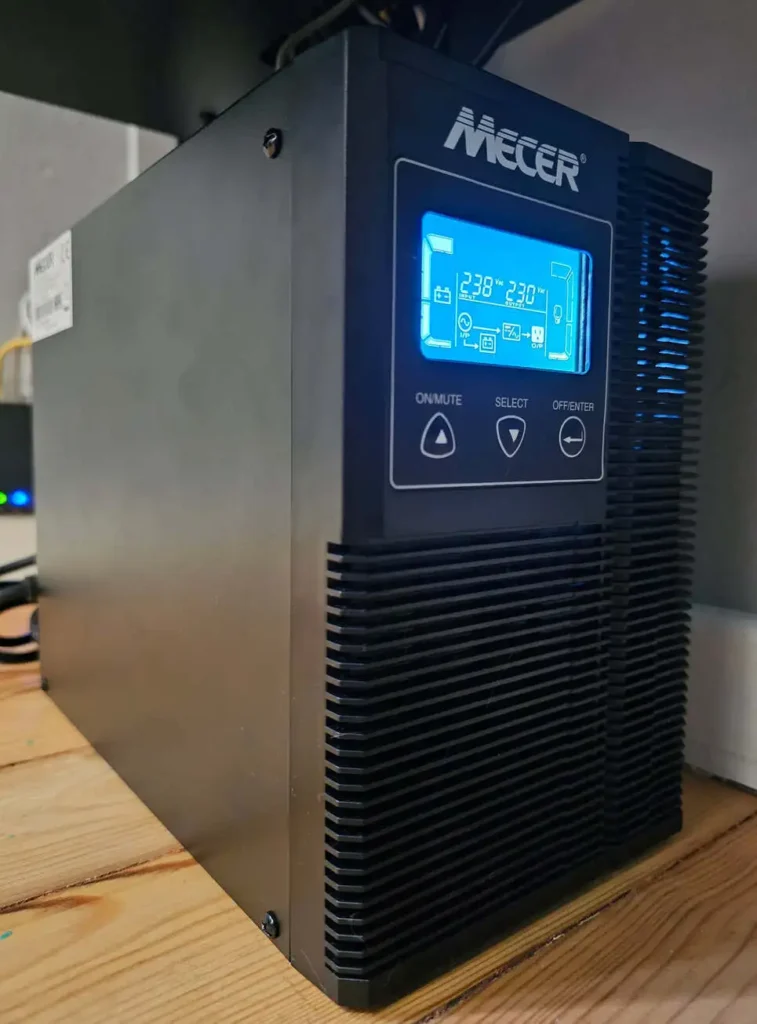
It also got me realising that my older APC UPS (uninterruptible power supply) was a really dumb one. It had no external connectivity to monitor the state of the UPS. So I did some research and found out about open source NUT and saw they supported a wide variety of UPS brands and models. I did eventually settle on a Mecer ME-1000-WTU UPS. It has NUT compatibility, so not only can I monitor the state of the UPS, my OMV server can use this monitoring to also automatically shut the server down while there is still enough battery charge remaining. OMV server has a NUT plugin that installs the NUT server monitoring software. All I had to do, was tell it to use the blazxer_ups driver for the Mecer UPS. The Mecer UPS is an online one which also smooths out the output voltage and frequency, meaning enhanced stability for all my devices connected to the UPS.
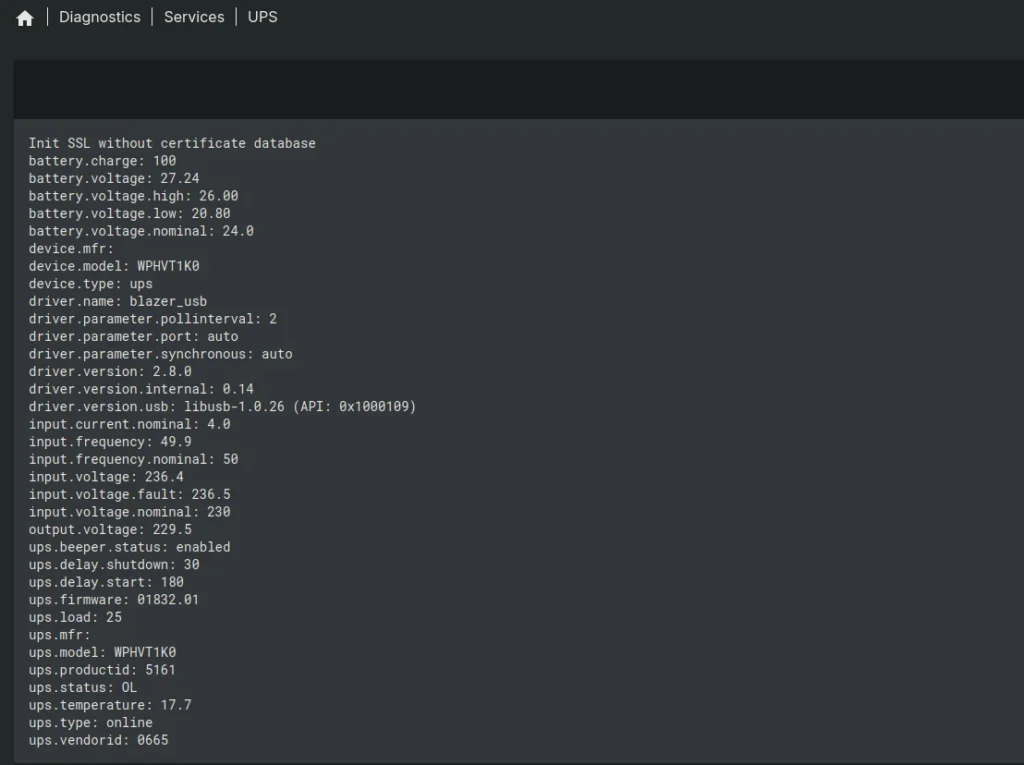
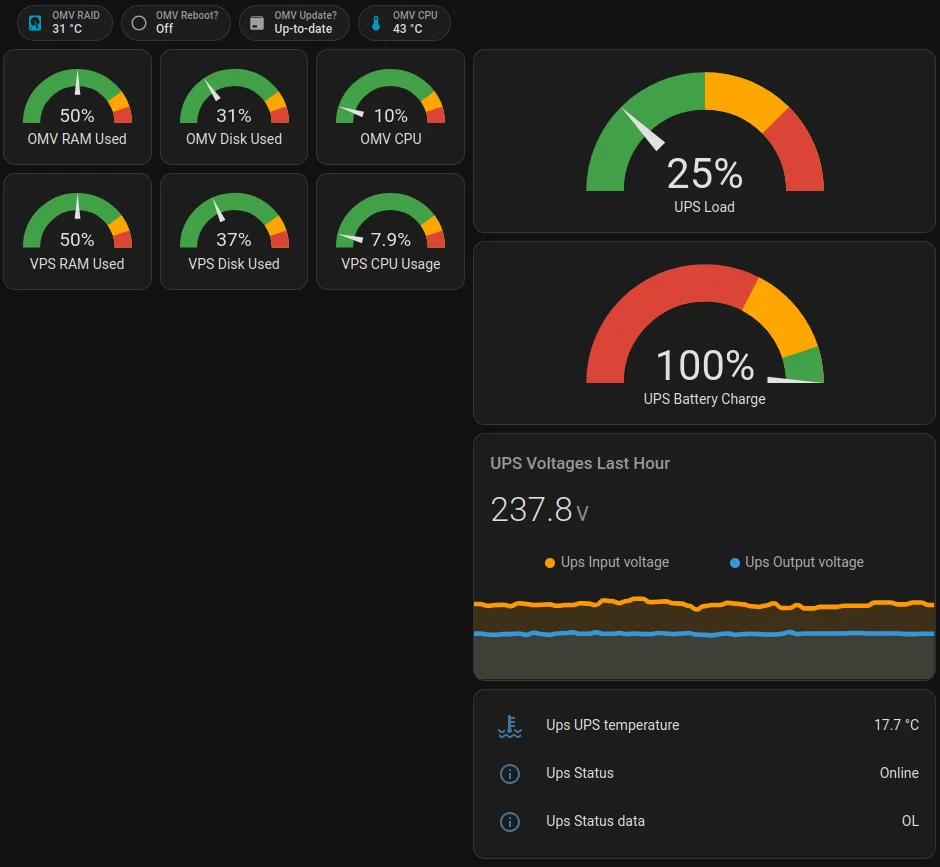
And of course my Home Assistant application now also monitors and shows the UPS status on its dashboard, and I have set up an automation to alert my by Google Speaker announcement, and alert to phone, when the battery charge drops below 85%. Below is an image of the view on my Home Assistant dashboard.
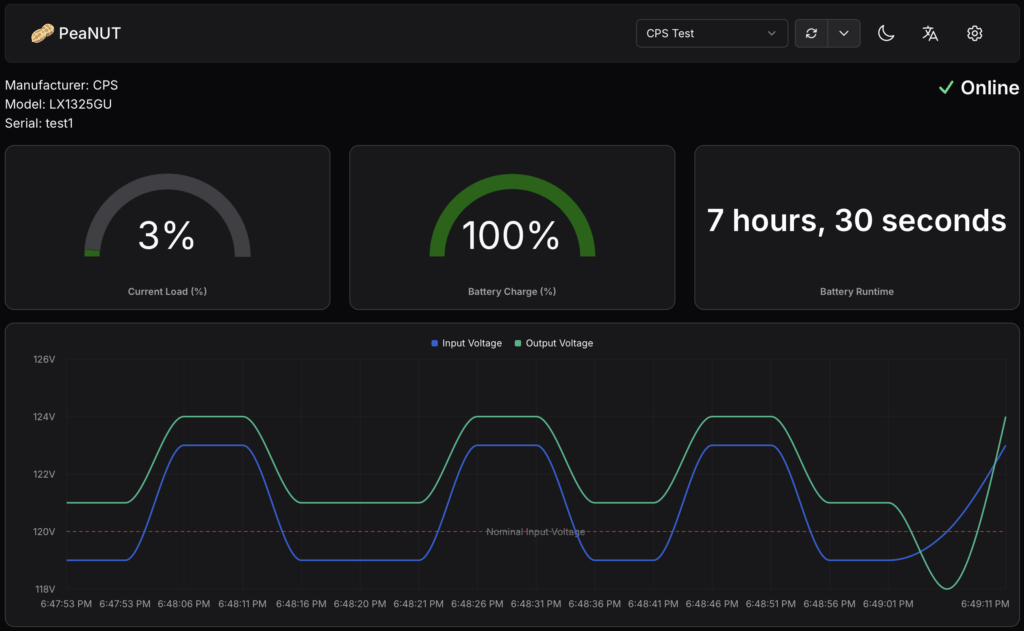
But there is more… Even if you don’t have Home Assistant, you can install the NUT software on your server, and then run PeaNUT (https://github.com/Brandawg93/PeaNUT) in a docker container to monitor the UPS and show stats. PeaNUT’s dashboard can be further configured, and data can be exported to InfluxDB or Prometheus.
But there is also a whole page long list of additional 3rd party software that works with NUT (because it is open). Which just goes to show again that “open” is good. Fact is, Mecer was able to sell me a UPS because it is “open”. They still make a sale, and Efergy did not.